Showing posts with label Comida/Food. Show all posts

Saturday, November 24, 2012

In my last post about my adventures in Santo Domingo, I made a reference to an unnamed place where my friend Hector took me to grab a bite to eat.  Well, it's time to name this unnamed place and tell you exactly what it was I ate.

The place is called La Markesina, and they specialize in serving chimi's.

What's a chimi you ask?  This is a chimi:


To the naked eye, it looks like any old hamburger.  Well, as far as I'm concerned it's probably the best damn hamburger I've ever had.  This thing could easily out sell the Big Mac if you ask me.

Anyway, my personal taste buds aside, a chimi is the Dominican version of a hamburger.  It's full name is chimichurri, not to be confused with the Argentinian salsa of the same name.

Let's talk a little more about La Markesina.

La Markesina is a very popular place in Santo Domingo, but it's not a regular hamburger place like here in the US.  It's an outdoor "restaurant" if you will.  Actually, think of it as more of a puesto de hamburguesas - hamburger stand.

I was only thinking about stuffing my face when I was there, so I didn't take a photo of the place, but luckily I found some photos on their Facebook page.  We'll get to the pictures in a minute, let's talk about the process of getting your hands on one of these delicious hamburgers.

First you have to place your order.  The menu is pretty extensive.


I had the #4, El Doble Full de To' or The double with everything.  To' is short for todo.

After you decide what you want, you give your order to the guys working the grill.


Once your order is in, you have a seat and they bring your food to you when it's done.


As you can see, the seating is outside.  You basically just hang out and shoot the breeze.  At night it's a virtual party.  People are everywhere, not to mention the music.  If the music isn't coming out of a boom box then it's coming out of a car stereo.  You can even have a nice cold beer while you're relaxing and enjoying your chimi.

I gotta say, if you go to Santo Domingo, La Markesina is place you just have to go to.  If even if you don't, you have to try a chimi, no matter where you get it from.  Add it to your list of things to do, you won't regret it.

You can find them on Facebook if you want to take a closer look at what they have to offer.

https://www.facebook.com/LAMARKESINA

While the chimi was probably the highlight of my food adventures, there was one other thing that really got my attention, and it's called a yaniqueque.


I saw my first yaniqueque on the beach in Boca Chica, which is about an hour away from Santo Domingo.  You may know a yaniqueque as a good old Johnny Cake.  Personally I had never heard of them in English either.  Anyway, people were walking around the beach selling them all day long.


After you buy your yaniqueque, add ketchup to taste and have at it.

I have to admit, my trip to the beach was pretty interesting.  Aside from trying a yaniqueque, I tried coconut milk straight out of a coconut for the first time, and I believe I even saw a few sanky panky's appling their trade.

What's a sanky panky you ask?  Well, a sanky panky is a guy trying to find female tourists willing to pay him to spend time with her and wine and dine him.  Some sanky panky's are looking for something even bigger, like finding a woman willing to marry him and take him back to her country.  In fact, there was even a very popular Domican movie about sanky panky's, not surprisingly called Sanky Panky.  It's in Spanish, and it's kinda cute.  If you've got a few hours to kill and want to practice your Spanish check it out.


That's it for now.  I've got one more post to make to bring you 100% up to speed on my Dominican adventures, so stay tuned!


Wednesday, August 29, 2012

Yes, it's that time again where I share some Spanish with you that I learned while I was out and about stuffing my face.

I just recently got a new job, and luckily there's a Mexican restaurant just a few minutes down the street.  Only this isn't just any old Mexican restaurant.


So what's different about this place you ask?  Well, let's start by explaining what a few of those words on the letrero (sign) mean.  A taquería is a place that specializes in tacos, although many of these restaurants (including this one) sell much more than tacos.  I actually talked about taquerías in my last post.  If you missed it, click HERE.

Now let's talk about what a paletería is.  A paletería is place were they sell paletas.  OK, sorry, I know that didn't explain much of anything, but this probably will:


And yes, those are my fingers, just in case you were wondering.

Now you know a paleta is a popsicle.  But paleterías don't just serve popsicles, they serve popsicles made of fresh fruit, and man do they taste good!  You'll find all different kinds of flavors, like durazno (peach), sandia (watermelon), fresa (stawberry), melon (melon), mango (mango), mango con chile (mango with chile - it's supposed to be spicy but I've never tried it) and a ton of other flavors.  Sandia is my favorite.  Take a look at what's in the fridge:


To actually order one of these tasty treats, you can say something like:

Quiero una de fresa
I want a strawberry one

Deme una de sandia
Give me a watermelon one

Una paleta de melon
One melon popsicle

Don't forget the "por favor", you can never be too polite.

It's also fairly typical for a paletería to sell helado, which is ice cream for us English speakers.  And it should come as no surprise that Spanish also has a word for an ice cream shop - heladería.

Speaking of ice cream, here are a couple of other words you should know if you plan on ordering ice cream in a paletería or heladería.  But first, take a look at this video.  I probably won't need to explain much of anything after you watch it.


Cono - You've probably guessed that this means cone.

Vaso -   Technically this means glass.  It could also be used to ask for a cup made of plastic, styrofoam or  otherwise.  And obviously for a cup of ice cream, even if the cup is actually a bowl. And you will probably see the words taza or copa as well.

And just to be thorough, an ice cream scooper is called a cuchara para helado.  Or a pala para helado.  Don't be surprised if there are other words for it as well.  It's not uncommon for different Spanish speaking countries to use different words.

That's it for today.  If you're still dealing with those hot summer days, run out to the nearest paletería or heladería and use your new Spanish vocabulary to get a nice refreshing helado or paleta to cool off!

And no, Burger King is not giving me a kick back for posting their video. I wish they were.

¡Hasta la proxima!

Friday, August 3, 2012

I love Mexican food.  And as you all know, there are a ton of great Mexican restaurants that can be found all over the country.  But there are also some great places that serve Mexican food that you may have overlooked.

Have you ever seen one of these?


We typically call  these mobile restaurants taco trucks, but they're actually called loncheras.   I'm not sure if this a Mexican term or not, but don't be afraid to use it. If your friends aren't familiar with the term you can have the honor of teaching them some Spanish.

On a side note, this is also a lonchera:


That's right, a lonchera is also a lunch box.  We're not here to talk about  that type of lonchera today, but if you want to take a walk down lunch box memory lane, click here to see a great collection of loncheras retro - retro lunch boxes.

Let's get back on track.

If you've never eaten at a lonchera, you've been missing out.  Depending on where you live, finding a lonchera can be like searching for hidden treasure, but once you find one you won't be disappointed.

So what does a lonchera serve you ask? A little bit of everything.  Here's a fairly typical menu:


Personally I almost always go for a torta or a trio of tacos - lengua, pollo and barbacoa.

Enough about my food interests.  Maybe I'll talk about that in another post.

A lonchera may also be called a taquería, but a taquería can be a lot more than a taco bus.  

In general, a taquería is a restaurant that specializes in tacos.  The taquerías that I've seen often offer other items, but tacos are their primary business. Here in the US a taquería typically looks like a regular  restaurant, but when you're walking the streets of Mexico they might look something like this:


There's also another kind of restaurant you can find in Mexico, a lonchería.  A lonchería is a place you can go to have lunch.


When you're on the go in Mexico and don't have time to sit down and eat, don't worry, you don't have to go hungry.  A quick stop at a puesto de tacos (taco stand) will take care of that hunger.


OK, now I'm getting hungry so it's time to wrap this up.  But before I go I want to share one more thing.

Our Spanish books only give us two options to tell someone that we're hungry.

Tengo hambre
I'm hungry

Tengo mucho hambre
I'm very hungry

Well, yeah, those work and get your point across, but here are a few more ways to say you're hungry that are a lot more fun.

Me muero de hambre
I'm starving


Me estoy muriendo de hambre
I'm starving

The second version of "I'm starving" is a more literal translation, but I think the first version is more common.  Either way, they both work.


Tengo tanta hambre que puedo comer una vaca entera
I'm so hungry I could eat an entire cow

Con esta  hambre me puedo comer una vaca entera
I'm hungry enough to eat an entire cow

Yo con esta hambre y hay fila en la cafeteria
I'm so hungry and there's a line in the cafeteria

Traigo un hambre que parecen dos
I have a hunger that seems like two

This last one just doesn't make sense when you translate it literally.  With that in mind, I'll give you a translation that more or less expresses the same idea.

Traigo un hambre que parecen dos
I'm hungry enough to eat for two

That's it for today!  Go out and grab yourself a bite to eat at your favorite lonchera and enjoy!


Monday, July 23, 2012

I'd be willing to bet you haven't seen the word chesco in your dictionary or any other dictionary for that matter.  I really don't remember where I came across this word, but never mind that, let's talk about what it means.

Like so many other words I talk about on this blog, chesco is mexican slang.  The standard word is refresco.    And if you've never heard the word refresco, you'll be glad you read this post.  Here's a photo:


Yes, a refresco is a soda. 

While chesco is mexican slang, the word refresco is universal.  It's not hard to use, here's an example:

Dame dos tacos y un chesco
Give me two tacos and a soda

Quiero un chesco, una coca
I want a soda, a coke

Notice that you can say coca to order a coke.  Coca seems to be pretty universal, I've used it with Dominicans and Puerto Ricans as well as Mexicans.

Since we're on the topic of refrescos, Mexico has it's own very popular (and delicious) brand of refrescos called Jarritos.


Personally, I love these things.  They come in many different sabores (flavors) such as:

Tamarindo, mandarina, tuttifruti, jamaica, limón, toronja, guayaba, piña, fresa, mango
Tamarind, Orange, Fruit Punch, Jamaica, Lime, Grapefruit, Guava, Pineapple, Strawberry, Mango

My personal favorite is fresa. You can find Jarritos in any Mexican grocery store or authentic neighborhood Mexican restaurant.

While we're on the subject let's talk a little more about a refresco.

A refresco can come in a botella (bottle) or a lata (can).  If it comes in a botella, then you're going to need to destapar the corcholata.

Destapar means to uncover or take the bottle cap off of our botella.   You'll need a destapador for that. 


And a bottle cap is called a  corcholata.  At least that's what it's called in Mexico.  If your Spanish speaking friends are from another country, ask them what they call it, as I suspect each country has it's own name for it.  In fact, share it in the comments section when you find out.


That's it for today.   Now go out and enjoy your refesco of choice!

Monday, August 22, 2011

So there I was, trying out a local puerto-rican restaurant for the first time.  I ordered the lunch combo, fried fish, rice and plantains.  When I ordered my plantains, that's when "la pregunta del millón" (the million dollar question) question came up.   

¿Tostones o  los amarillos?

Great.  Now what?  There I was thinking "what the hell is he talking about?".  Once again, Spanish has left me dazed and confused.  Only this time I think I had every right to be, I just didn't know it yet.

Luckily, this story did have a happy ending, I got what I wanted, some very delicious plantains.  It also started me down the path of a Spanish lesson that didn't end for a few months.

Here's what I ordered from that Puerto-rican restaurant:


We know them as plantains.  In the Spanish speaking world they're known as platanos.  Sort of.  

Let's go back to my restaurant adventures for just a minute.  If you recall, I was offered two choices when I asked for platanosLos amarillos o tostones.  It only took about 3 more visits to the restaurant for me to burn into my brain which is which.

Los amarillos are the delicious plantains shown in the photo above.  And at some point they were even refered to as los dulces.  Now here's a picture of tostones.


While I do enjoy this style of plantain, they aren't my favorite.  Not that you care.   Anyway, with my new found knowledge I later went to another Puerto-rican restaurant and proudly ordered "amarillos" with that confident, smug look on my face.  It disappeared quite quickly when the waitress made it clear she didn't know what I was talking about.  I also tried "los dulces".  That didn't work either.  This story ends with me not getting my amarillos, but instead I got tostones.  By the way, tostones are also called patacones.

Needless to say, I was completely confused.  And it got worse before it got better. 

Today I'm hoping this blog post will help save you from the confusion I suffered.  With that in mind, let's take a step back and talk about what a plantain is.

Here's a picture of a plantain, or plátano.  OK, two platanos.


Notice one is green and one is yellow.  While they're both platonos, the green one is called  a platano verde (a green plantain) and the other plátano maduro (a ripe plantain).  Simple, right?  Oh wait, in Mexico the plátano verde is also called a plátano macho

This is where things get tricky.  This is also a plátano:

No, your eyes aren't playing tricks on you.  That is what we call a banana.  Definitely not a plantain.  Also remember that the very first picture I showed you was also of platanos.  Aside from being called a plátano, it's also called a banano.  In Venezuela, it's called a cambur.  You may also hear it called a guineo. Got all that straight?  Oh, did I forget to mention you might also hear this called a banana?  With a Spanish accent of course.

I still find it hard to keep everything straight, I just hope I see something I recognize on the menu and pray for pictures.  I'm hoping you'll have better luck than me.  And if you're looking to me for advice on how to order the type of plátano you want, that's probably a bad idea, I'm batting about 50-50.  But I'll try to help you anyway. 

In general, if you want the sweet plantains, ask for platanos maduros or platanos dulces.  For the other kind, go with tostones, especially if you're in a Puerto-rican restaurant.  And don't be afraid of giving me advice, I've already admitted to only batting 50-50.  Clearly I need all the help I can get.

The last thing I'll leave you with is a link to an interesting article discussing this very subject, but it has the added bonus of several Spanish speakers chiming in.  They provide some great insight into what is what in they're respective countries.  It's in Spanish, so you can get some good practice in.

 http://www.marioberges.com/blog/2007/04/platano-y-guineo/

 ¡Hasta la próxima!

Monday, June 20, 2011

Most of have been a diet at sometime or another, even if it was just the classic "seafood diet - I see food, I eat it".

Well, we Americans aren't the only ones with a special diet.  Mexicans have their own special diet called "vitamina T".

What is a diet of "vitamina T" you ask.  Simple...

 TORTAS, TACOS, TAMALES, TORTILLAS, TLACOYOS, TELERAS, TOTOPOS, TOSTADAS

Needless to say, if you're familar with Mexican food, you already know that you're not  going to lose weight on this diet. 

Let's talk take a look at what these foods are. 

In many Spanish speaking countries, a torta is a cake.  But in Mexico, a torta is a sandwich.  But not just any kind of sandwich:


Tortas are delicious.  You can find them at any authentic Mexican restaurant.  And if you're wondering what a cake is called in Mexico, it's pastel.

Is there anyone who doesn't know what a taco is? 


You might be surprised by this picture, because it's not the classic hard yellow taco shell Taco Bell and Old El Paso made famous.  Every taco I've ever ordered in Mexico (or even an authentic Mexican restaurant here in the US) serves tacos like the one in the foto.  Squeeze a little lime juice on it, and yummy, se hace la boca agua (it makes your mouth water).

Tamales are pretty straight-forward:


Tortillas.  If you don't know what these are you really have been living under a rock.


While I've never eaten (or seen) a Tlacoyo, thanks to the internet I can still show you a photo:


Teleras:


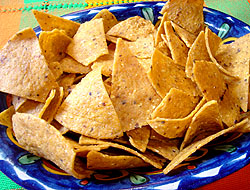
While Totopos may seem like a fancy name, you already know what these are.   Impress your waitress by asking for "más totopos" the next time you go to your favorite Mexican place.


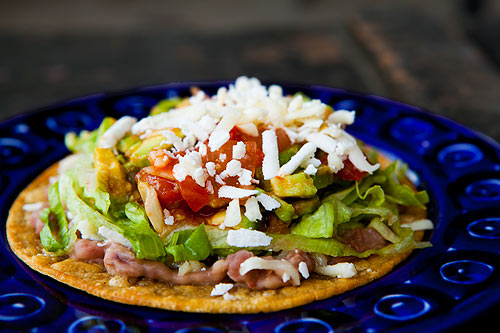
And finally, tostadas:


When someone tells you they're on a diet of "pura vaitamina T", they may be "subiendo peso" (gaining weight), instead of "bajando peso" (losing weight).  Colloquially that's a very common way of talking about gaining and losing weight, but the official verbs are Adelgazar and Engordar(se).

Well, that's it.  I don't know about you guys, but all this talk of food has made me hungry! 

¡Voy a engordarme!

Monday, September 13, 2010

Sometimes Spanish really throws me for a loop.  What seems so simple and straight-forward sometimes isn't.  Like talking about tomatoes.

For most of the five years I spent learning Spanish, I was happy knowing that tomate was Spanish for tomatoe.  And it is.  But so is jitomate

Jitomate is a word you'll hear in Mexico for tomato.   The good old round red tomatoes that we know so well.  And just for giggles, here's a picture.


Now, there is another type of tomato.  You know, what we call cherry tomatoes.


These are called tomatillos.

So there's one more kind of tomatoes we still have to talk about, the green ones.


Guess what these are called?  Tomates.  Or a tomate verde.

Well, wasn't that interesting? But guess what?  It gets better.

These variations on the names of tomatoes vary regionally within Mexico.  I found an interesting thread in WordReference that has a very nice discussion about tomates.  Check it out:

Jitomate

I would have never thought a discussion on tomatoes would be so complicated.  ¡Ni modo!

¡Hasta la próxima!

Wednesday, May 6, 2009

Once again, I was stuffing my face with my Spanish amigos (I'm surprised I don't weigh 400lbs by now!), and mi amiga de España taught me a new word - Gamba.

Gamba is apparently the word you need to order shrimp in Spain. I say that you need this word, because she went on to tell me that the word camarón (or camarónes) isn't used in Spain. To be exact, she said no one in Spain will know what you're talking about. Hopefully she was exaggerating, but if she wasn't, at least now you'll be prepared.

As I delved a little deeper into the subject I also got an education on shrimp. It seems that all shrimp are not created equal, and neither are their names:

Langostino: King prawn
Gamba: Prawn
Camarón: Shrimp

I'll leave you to discover the differences between them. As for me, all I need to know is how to ask the waiter to bring me these tasty creatures on a plate.

Tuesday, February 10, 2009

I love bananas. They're probably my favorite fruit. Naturally I would want to know how to ask for them in Spanish. And until recently, I thought I did.

It turns out that things are a little trickier than you might think. I remember reading in my Spanish dictionary (or somewhere) a long time ago, and saw that the word for banana is plátano. I thought "Hey, that's pan comido", and I never gave it a second thought. Until today.

I was talking with Jorge, my Colombian amigo, asking him if he had eaten lunch already. He said "No, I'm going to need about 30 minutes to finish up a few things". So I said "Voy a comer mi plátano hasta entonces". And he says "you mean your banano". I immediately gave him the deer in headlights look. At this point he must think I was born with that expression.

So, the next question I asked was "is that Colombian slang?" Well, long story short, we looked in his encyclopedia and browsed around in WordReference, and we both learned that the word for banana depends on where you are.

In Colombia a banana is a banano, and banana (or bananita) is a piece of hard candy. A plátano is a plantain. To find out what what a banana is called in other countries, look at this thread in WordReference.

And just as an FYI, banano can also be a banana tree, and banana the fruit of the tree. Quite honestly, I was surprised to hear about the number of variations Spanish has for banana. Nonetheless, there's no sense in letting this stuff drive me bananas.

Tuesday, December 9, 2008

As usual, I found myself enjoying a delicious meal while learning some really fun, interesting and occasionally useful Spanish.


Ever get the bill and it's so high that you go into total shock thinking to yourself, what did I order?! You can express that shock in Spanish by saying..."¿que rompí?" - What did I break!?


Think of knocking over a shelf full of expensive items and being expected to pay for them all. Thus the analogy of getting stuck with an expensive bill - "¿que rompí?" And of course you can conjugate the verb (romper - to break) to express this sentiment for all occasions - ¿que rompiste? , ¿que rompimos?


I'm sure we've all made jokes about not having enough money to pay the bill for that porterhouse steak we've just devoured, and how we're going to have work off the bill by washing those dishes. Turns out they have the same joke in Mexico - "Voy a tener que lavar los platos". You can also substitute the word "trastes" for platos.


My amiga told me these are Mexicanisms, so your other Spanish speaking amigos may not be aware of them.


Hmm...I think I also said that occasionally I learn some useful Spanish. It just so happens this is one of those times.


If you want to have something "on the side", there's at least two ways to say it. In my case, I didn't want the sour cream (la crema) that came with my meal on the same plate, so I said "quiero la crema aparte". Well, I sort of said that. OK, I lied, I didn't say that. That's what my amiga taught me after the fact. I had to break down and ask the mesero (waiter) in English, but now you have the benefit of having that piece of Spanish handy when you need it. You can also say "quiero la crema en otro plato". And of course, you simply replace "la crema" with the name of the food in question.


I also picked up another interesting word - changarro. Oddly enough, the day after I learned this I saw an entry about this very same word in another blog. You can read about changarros here. I recommend you click the link I gave you, because they explain what a changarro is just as well or better than I can, and they have a nice picture too. Here's a brief excerpt from the link:


Changarros are typically located in improvised spots (the sidewalk, one's house
garage, the median of an avenue) and almost always lack any permit to operate.

I see plenty of changarros in Mexico. They sell all kinds of delicious foods - churros, popsicles, hamburgers (hamburguesas), fruit (fruta), corn on the cob (elote) , tacos and hot dogs. Sometimes the hot dogs are wrapped in bacon (tocino).


An interesting note about hot dogs - that's exactly what they're called - hot dogs. At least in the northen part of Baja Califorinia near the San Diego border. But the real Spanish for them is perro caliente. Look at this thread in WordReference. There's also a few other words for hot dog you can learn about.


Well, that's it for now. Lucky for me I'll be stuffing my face again next week with my amigos and will hopefully learn something else worth sharing.

Thursday, November 27, 2008

Food seems to be a recurring theme with my blog. I guess that's a good thing. This time I ate my first pupusa. They're from El Salvador, and you can read about them here . Let me tell you, they are ¡muy rico!

Pupusas are sold in a place called a pupusería, and the one I visited had several kinds on the menu - pupuso mixta, which had frijoles (beans), chicharron (chopped pork), and queso (cheese). They also had pupusas de pollo (chicken) and de carne (beef).

Aside from selling pupusas, this place was also a panadería (a bakery), and they had a number of tasty looking treats. There were turnovers called pañuelos (my Colombian friend called them Pastel de Gloria) that were filled with either piña (pineapple) or fresa (strawberry). On a side note, If you want to know what any type of food has in it, you can ask "¿qué tiene?".

There was also a kind of banana flavored bread pudding, called pudding. I have no idea how you actual spell it Spanish, but it's said with a Spanish accent.

I gotta say that I'm loving all of this latin food. I can't wait to see where my appetite takes me next!

Monday, November 17, 2008

Well, that's what they say. I guess it's true. But if you ever find yourself talking to a Spanish speaking Elephant, you're going to need at least one of the following words...

Peanuts are cacahuates. Well, that is, if you're in Mexico.

In Spain you would call them cacahuetes.

And if that isn't confusing enough, in Colombia and a few other places, a peanut is called a maní.

Apparently this is a surprise to some Spanish speakers as well. Check out this thread. You'll also find out what other countries use maní for peanut.

Sunday, October 12, 2008

There's nothing like a good steak, and it's probably a good idea to be able to tell the mesero how you'd like it cooked. It's a good thing I had my Mexican amigos to give me a little help in this department.

If you like your steak well done, then you want it bien cocido.

Like it medium well? That's tres cuartos. Medium is término medio. If you like your steak medium rare, then you could ask for it término medio pero un poco rojo.

For those of you who like it rare, you have a few options - poco cocido, casi crudo, or roja.

There are probably a few other ways to ask for that perfect steak, but hopefully this has given you a good start.

¡Buen provecho!

Monday, September 15, 2008

With Mexican Independence day around the corner, it became the topic of discussion at my most recent Spanish meetup group. Our discussion centered around a few articles about the war for independence and some of its heroes. Here's a link to one of them:

http://en.wikipedia.org/wiki/Niños_Héroes


But that conversation took place after a few rebanadas (slices) of pizza. And lucky for us, pizza is the same word in both English and Spanish.

You can also use the word rebanadas to talk about a slice of anything, cake, bread, etc. It can also be used colloquially to talk about slicing your finger open too. Ouch! And the word rebanar is the verb meaning "to slice".

I overheard someone asking for a straw, which is a popote. At least in Mexican Spanish it is. The other term that came up was pajilla. But wait, it's not that simple. As was I double checking the spelling of these wonderful Spanish words, I discovered that the word for a drinking straw is quite regional. You can learn more words here:

http://forum.wordreference.com/showthread.php?t=6897

Now, back to the pizza. I decided to share a pizza with una amiga. We ordered a pizza with peperoni, brócoli, and pimiento verde. I'm guessing you won't need much help translating the first two. Pimiento verde is a green pepper. Other types of peppers - pimiento rojo and pimiento amarillo. But ¡cuidado! You don't want to confuse these with good old-fashioned black pepper, which is pimienta.

I asked the esposa of my newly married amigo how difficult it is to get a tourist visa from Mexico to the US. Well, it's not incredibly hard, if you have a trabajo fijo (permanent job) and/or own property in Mexico. And you have have to pay the application fee, of course. Apparently governments all over the world have caught on to the concept of charging people for services.

Some other random things that popped up....

MXP is the abbreviation for the Mexican Peso.

On the off chance you ever need to talk about the Chicken Pox, the Spanish word is varicela. My amiga refered to those nasty itchy little bumps as ronchas, although a quick search also revealed the word ampollitas.

A mechanical bull is a toro mecánico.

Remember the famous statue of the Thinker? Well, in Spanish you would refer to him as el pensador. To be slightly more exact it would be the "estatua de pensador".

And last but far from least, I learned what a coqueto is - a person who likes to coquetear. A flirt. And like most adjectives in Spanish, if you're talking about a woman she would be a coqueta. So the next time that cute Spanish guy or gal is giving you the eye, ask them...

¿Estás coqueteando comigo?

Tuesday, September 9, 2008

Every Monday night I have dinner with my local Spanish MeetUp Group. We simply have dinner and chit chat in general. Well, this time I took notes.

I mainly spoke with the esposa of the group's organizer. They haven't been married long, only a few months. So I asked her how she was enjoying married life - "vida de casada".

Now, prior to getting married, she lived in Mexico City (Cuidad de México or simply México), so naturally my next question was how she liked living in the US. She said she likes it here, but like anything else, it has its pros y sus contras (pros and cons).

She told me a little about la Cuidad de México, and I asked her where people from Mexcio City go on vacation. Apparently lots of people go to Acapulco. Other top spots are Guadalajara, Ixtapa, and I believe Veracruz. There were a few other places, but I didn't write them down. But the people with lots of money to burn come to the US - Miami, Orlando, New York, and surprisingly (at least to me), Houston. I asked her about her favorite vacation spot, and she likes to go to Ixtapa, because her family has a tiempo compartido (time share) there.

On a completely different subject, I learned a few ways to describe a womans dress - it can be a vestido largo (long dress), a vestido corto (short dress) a vestido ancho (loose fitting), or muy apretado or pegado - tight. And a mini-skirt is a minifalda.

Somehow we got on the topic of snacks. What really got my attention was the fact that she was speaking in Spanish and actually used the word "snack". I said "isn't this Spanglish? " But much to my surprise, she told me "snack" is a very commonly used word in Mexico. Other words for "snack" - botana, but you'll only hear this one in Mexico, and colación.

We got into a discussion about the difficulties of learning certain things in Spanish. I said that one of the things I find muy cunfuso (very confusing) is when to use the preterite and imperfect tenses, which then led to another confusing subject, ser and estar. I then proceeded to tell her my meta (goal) was "estar bilingüe", and she promptly pointed out I that my goal is to "ser bilingüe". Further confirming her comment about ser and estar being confusing.

I also didn't realize I was going to be tested on my abecedarios. If that word doesn't sound familar, then you might recognize this one - el alfabeto. While I was able to recite my ABC's, I had to confess that I (still) can't trill my R's. I was also disappointed to learn that there's no alphabet song in Spanish.

Speaking of alphabets, in Spanish when you have two of the same letters that appear next to each other, you say "doble (letter)". E.g. to spell the word "letter", you would say " elle, e, doble te, e, ere". To say "...te, te..." is oh so wrong.


The last thing I have to share is about the cheesecake I ordered. Being a kind and gentle soul (and more importantly, not wanting to get fatter), I shared with my new amiga. And by sharing, I mean I attempted give her more than her fair share. But like any polite person, as the size of the cheescake dwindled, she wanted me to enjoy the last few bites. So, when I tried to insist that she take yet another bite, she told me an interesting dicho - the cheesecake "es probete, no llenete". Which means something like "you're just supposed to taste it, not fill up on it". Now, not being the type to give up (I was determined not to eat those extra calories), I told her a dicho I was familiar with "come uno, comen diaz". That means if there's food for one, there's food for ten. In other words, it may be a small portion, but we can still share it. While it was indeed a witty comeback, I still ended up eating the extra calories.

Monday, September 1, 2008

The Big Mac....

Two all beef patties, special sauce, lettuce, pickles, cheese and onions on a sesame seed bun!

We all know the song, but can you sing it in Spanish? I just happened to go into a McDonalds that had a poster with both the English and Spanish lyrics. Now, sing it with me...

Dos raciones de carne, salsa especial, lechuga, pepinillo, cebolla en un pan con semillas de ajonjolí.

While I was quite excited to see the Big Mac song in Spanish, I wanted to hear it as well. So, off I went to http://www.mcdonalds.com.mx/ hoping to find a Spanish version of one of the many childhood jingles shameless advertising has burned into my brain. But guess what? The Big Mac isn't even on the menu! Imagine my surprise. And no commercial either.

Well, I wasn't about to let that stop me from enjoying one of my favorite jingles in Español. So I did what I do best - I googled it (lo googleé), and I found this:

http://vids.myspace.com/index.cfm?fuseaction=vids.individual&VideoID=36361345

Clearly this is not one of the original Big Mac commercials, but I think it's great modern day jazzed up version that you just might enjoy singing along to.

I also found another McDonalds commercial in Español :

http://www.youtube.com/watch?v=oxNxXDLCbvc&NR=1

This one isn't Spanish, but vey, very funny
http://www.youtube.com/watch?v=y9ajRIgTJNA&feature=related

And as for "googleé" yes, that's a real verb - googlear. But more on that later.

Lastly, if you're interested in what McDonalds has on their menu in other Spanish speaking countries, go to http://www.mcdonalds.com/ and select your country of choice.

Saturday, August 23, 2008

Today my Colombian co-worker took me out for some tacos - "estilo Méxicano, muy típico de México".

So let me tell you about the things I learned during lunch today.

I drove and he gave directions. I had to turn right "Doblar a la derecha" or "Hacer a la derecha", make a right, several times. I also had to continue going straight, "derechO", which I confused with turning to the "derechA". I knew the day would come when I'd confuse those two. That was a good reminder to pay close attention when getting directions.

It didn't take long to get there. The "restaurant" if you can a call a bus they cook and sell the food out of a restaurant, was in the middle of a hispano neighborhood. Mi amigo told me that the word "Hispano" refers to all Spanish speaking people.

So, they had tacos de carne asada, pollo, lengua, barbacoa (bar-b-q), and some various other things, like tortas, and quesadillas. My amigo recommended the lengua...not my first choice, but I said to myself, "why not?" Surprisingly, they were quite good. By the way, to be specific, it was lengua de vaca - cow tongue.

They also had a good selection of Mexican refrescos (sodas). I chose a piña Jarrisco, which if you don't know, is a bottled soda. They have lots of great flavors, but I digress. So after finally making a decision about what to drink, I realized the soda had a pesky bottle cap, called a tapa, that needed a destapador (bottle opener) to remove. Once I found the destapador, I was able to "quita la tapa".

The food was great. I really enjoyed it. I also didn't mind the woman taking the orders, Ella estaba bien "chichona" - busty. The whole experience made me feel like I was back in Mexico buying tacos from the street vendors.

On the ride back to the office, we came across more than a few drivers who were in a big hurry. This is when I learned waaaay too many ways to express being in a hurry - tener prisa, apurar, afán, y a la carrea. I don't know quite know how to use them all yet, so maybe that'll be a future post.

During lunch we also talked about different ways to ask someone what they said when you didn't hear or understand them. There's "mande", "cómo dijo", "cómo dices", "bueno", "qué dijo", repite (por favor), perdón and "que dice su merced", although the last one is only used in Colombia.

I have to say, today's lunch was both sabroso and educational.