Showing posts with label Resources. Show all posts

Tuesday, July 2, 2013

Our friend Andrew was terrible at Spanish. He would often complain about how difficult it was and how despite, his most sincere efforts, he would never be reasonably fluent in the language. We always tried to encourage him, but we must admit that we too doubted the prospects of him ever becoming fluent. Even after several Spanish courses and video tutorials, Andrew could barely get started on conversations with native speakers. It was overwhelming and he was ready to call it quits. But in a last frugal effort he decided to take some time and work from Argentina (one of the many virtues of working as a web developer).

A few months later Andrew returned a changed man. What were once fragile mutters limited to basic introductions and overused phrases became elaborate discussions plentiful in colloquialisms and hand gestures. It was a beautiful sight.

Tacit learning vs. classroom Spanish


Without enough exposure, no amount of studying will help your Spanish
Photo credit: Christoffer licensed CC BY-SA 2.0
In retrospect, although Andrew struggled more than most, his experience was not atypical. You probably know someone who moved abroad and picked up the language quite quickly – faster than if he or she would have studied it from his or her home country. Intuitively, it is not hard to see how the constant exposure to a new language in day-to-day interactions would push one to learn faster. However, educational research tells us that it is more than just frequency of exposure, but also the method of exposure. The improved rate of learning comes largely from the use of tacit vs. explicit knowledge creation.

Think of tacit knowledge as intuition. It is knowledge we already have or acquired through past experiences, but we are unable to easily explain it to others. It’s what we have learned through practice, observation, and repetition. Think of knowing how to ride a bike, or more relevant, your own native language. You may not necessarily consciously understand the ins and outs of it, but you know what sounds right and what doesn’t and how to speak it. On the other hand, explicit knowledge is what you learn from studying facts, policies, and rules, i.e., your typical classroom learning experience. Both are important methods for knowledge creation, however language learners tend to spend the majority of their time developing explicit knowledge. Meanwhile those who learn a language in a foreign country develop a more extensive tacit knowledge drawn from exposure to the local environment and even television.

Total immersion is always at hand


Tacit knowledge development is precisely the reason why most “experts” will tell you that watching foreign television is a great way to learn a language. Now, Andrew was lucky that he could afford a vacation in Argentina, both financially and job-wise. But, let’s face it, such vacations are not always terribly practical or even affordable for most of us. As much as we’d love it, not all of us are blessed with the life of a freewheeling globe-trotter. There’s job, there’s family, there’s the anxiety of an alien culture, and then there’s the expenses involved. So, does that knell the doom of immersion for us lesser mortals? Not in today’s world at least, thanks to the global connectivity provided by the omnipresent Internet!

Short of taking a long break and moving to another country, the best (and the most amusing) way to immerse yourself into a new culture is through the local entertainment they produce, which reflects the language, traditions and customs of their world. An immensely useful example is watching traditional Spanish shows or telenovelas to practice listening comprehension and absorb the elaborate yet necessary colloquialisms. It’s no coincidence that this is the method recommended by many.

If you live in the United States, you may already have access to some Spanish TV channels. Or, if you’d rather watch from your computer or phone, take a look at free sites like DramaFever Latino, which allows you to watch full Spanish telenovelas online from Latin America and Spain with English subtitles.

Nonetheless, we’re not saying it will be easy: The tacit learning method requires active engagement and participation, not mere rote memorization. But it will pay dividends! Auditory learning tends to be more organic - babies learn languages by simply listening to the flow of dialogue and drawing logical connections. While you’re no longer a baby (we’d presume) your learning process will be somewhat similar. By watching Spanish shows and telenovelas you’ll be listening to real dialogue, not perfectly enunciated classroom Spanish, which will strengthen your listening abilities in real situations.

That being said, don’t burn your books yet. The best learning method is one which effectively combines traditional explicit learning with tacit knowledge creation. After all, knowing the difference between what sounds right and what is actually right can save you moments of mild embarrassment.

DramaFever Latino


DramaFever is one of the richest sources of free TV shows and novelas
Photo credit: DramaFever Latino
Of the many resources available all over the Internet when it comes to television programming in the Spanish language, DramaFever Latino is one of the most promising ones worth giving a shot. Launched as recently as 2009, this site has rapidly become a behemoth of a database with the credit of having one of the largest collection of international television content.

Available on a wide range of platforms including iOS and Android, this library currently offers over 13,000 episodes from across 12 countries and counting. This overwhelming array of programs should be enough to satiate your taste no matter how fussy. And if you can manage to get hooked to even one such program, that’s the Holy Grail of learning Spanish! Entertainment is the best teacher, more so when it comes to learning Spanish.

You can choose to be a free member or paid depending on your financial comfort. Even if you choose to go for the free subscription, you have at your disposal the entire collection of videos, unlimited with no strings attached, albeit with commercials. A paid subscription (which is surprisingly not quite a hole in your pocket at less than $10 a month) gets you the same library but in high definition and without any commercials.

Not keen on having to sign up on a zillion websites every time you find something useful enough? Well, DramaFever allows you to login with your existing Facebook credentials so no need to waste time filling out those annoying registration forms. By the way, the paid plan is also available $9.99 a year if you’re not a big fan of paying every month. However, you are advised to first try out their free subscription before you decide to take out that credit card.

So, there you are; no more excuses for not getting enough exposure to Spanish. Just go for the kill! There is a whole world out there doing incredible number of different things to help you learn that language. It’s a shame if you still feel you don’t have enough resources at hand. Just remember: It is entirely possible to learn Spanish without spending a dime and without getting bored. All it costs is your willpower and perseverance.

Feel free to drop a note in the comment section below to share your experiences with DramaFever Latino with the rest of us. We are eager to hear you out!

Monday, July 1, 2013

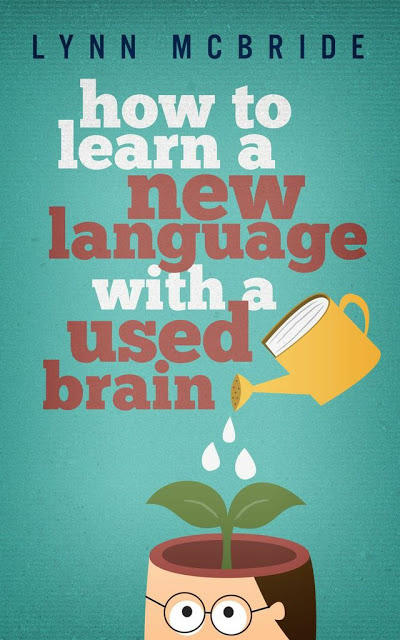
Let’s be honest and admit that learning any language, let alone Spanish, is an art most of us lack a taste for. It’s more of an “acquired” taste that needs a lot of optimism and an open mind to fully appreciate. In this article, we take a step back from our core focus and review a very interesting book that talks about languages in general instead of just Spanish. This book does not teach you Spanish or any language for that matter. What it does is a whole lot more – It teaches you how to teach yourself just about any language! Review this book with us and boost your linguistic morale like many others around the world.

Could learning Spanish make you Smarter?


Learning a language is great for communicating with new people and expanding your cultural savvy. But it has other benefits: language study actually changes the brain! Language learning can up your intelligence, improve your overall linguistic ability, and if you’re older, even ward off dementia. Talk about two birds with one stone!

A recent New York Times article talks about studies which show that being bilingual improves the portion of the brain we use to plan, to solve problems, and to perform difficult mental tasks. These changes are especially strong in children, but even older adults learning a language can benefit. The article points out that “...these processes include ignoring distractions to stay focused, switching attention willfully from one thing to another and holding information in mind–like remembering a sequence of directions while driving.” Anyone who has had to switch back and forth between English and Spanish or has struggled to understand a rapid speaker will understand how that can process can challenge the brain and focus the mind. And, as it turns out, language study enables you to address mental challenges better in areas that don’t even involve a foreign language.

With so many good reasons to learn a second language – for kids and grown-ups too – it’s best to be sure you’re using the most up-to-date methods.

New language with a used brain?


How’s that for a title? Intriguing, isn’t it? That’s what we are going to explore in this article. Now that we already know how learning a foreign language boosts our faculties, it’s imperative that we start doing it instead of just sitting pretty and talking about it. But where do we start? There’s just enough amount of resources out there to keep you wondering for an entire lifetime before you’ve even started! Isn’t it ironical that what’s meant to help you learn is also the very reason that’s keeping you from taking the plunge?

Lynn’s experience with French is just as relevant to Spanish learners too
Photo credit: Lynn McBride and Amazon.com
So obviously we need to get over this primitive dilemma and learn to sift the tools and methodologies than work from those that don’t. Easier said than done. Lynn McBride explores this topic in her new book, How to Learn a New Language with a Used Brain (available as a Kindle ebook at all Amazon sites for an extremely modest $2.99, and to be released as paperback in July, 2013). In addition to revealing all the surprising ways language learning can make you smarter and more sophisticated, the book gives you the very latest methods for successful language study.

The book is short but packed with ideas for making language learning effective, and, most important, fun. Here’s a peek at what’s inside the book:

  • A program for learning that you can tailor to your needs and learning style, called Six Steps to a Bilingual Life: A Roadmap for Your Language Journey, with a focus on keeping your motivation up, and finding ways to immerse yourself and practice conversation.

  • Tips and secrets from from expats, language experts, and many of Lynn’s blog readers who are on the front lines of language learning (Lynn blogs at Southern Fried French).

  • A “best of” review of the major resources for language learning, from freebies to packaged programs, and including lots of the dazzling new online opportunities for learning and interacting. There is also a review of the top learning packages available for purchase.

  • A special section for expats, on how they can optimize their language learning. Learning a language while living in a foreign country has its own special set of opportunities and issues, and the book discusses how to manage them.

The book focuses on the three keys of language learning. The first is to find ways to immerse yourself in the language. That means listening, talking, reading and writing, after you’ve mastered some of the basics. And with today’s online resources, absolute immersion is getting easier all the time.

The second key is to make a real commitment to learning the language, and to stick to it. The book has lots of ideas for setting up a personal program that’s doable, even if you only have a few minutes a day to devote to language study.

And make it fun! That’s the third and most important key. It’s doubtful you’ll stick with a program that’s dry, boring, and dead-beat monotonous. Still wondering why you don’t remember squat of what they taught in your high school Spanish classes? There are lots of ways to spice it up, add variety, and keep your self motivated, included in the book. One of the best ways is to make language learning a family project, involving kids and grandparents. Or, to learn a language with an friend, even if it’s an on-line chat-buddy. Language learning can really, and should preferably, be a social event.

So who is Lynn McBride after all?


Lynn and Domino at Château de Balleure
Photo credit: Lynn McBride/Southern Fried French 
The author of the book we just reviewed, of course. But she’s much more than that and that’s what lends her book the credibility for us to endorse it so enthusiastically. She is an American author from the historic district of Charleston, South Carolina, who has under her belt, articles published in some of the most well-read magazines on both sides of the Atlantic. Better Homes & Gardens, France Magazine, Living France, you name it. She has also worked with Meredith Publishing (Better Homes & Gardens and Traditional Home) in the past.

Lynn’s turning point came when she moved to the beautiful wine country of Burgundy in southern France (lucky lady!) with her husband, Ron, and cat, Domino. Here in France, with the help of her French hosts, Nicole and Pierre Balvay, Lynn started the process of rapidly absorbing everything French – the cuisine, the language, and the culture. The process has still not stopped and will perhaps never. This experience have her an incredibly valuable insight into the dynamics of learning a new language and she decided to share her experience with the rest of the world through the very book that we talked about here.

Speaking of French cuisine, she has really perfected her culinary skills while living in France and her recipes have appeared in quite a few national newspapers and magazines, both online and otherwise. So, if you ever happen to wind up in her neck of the woods, feel free to gatecrash her party and feast till you drop (just don’t tell her we referred you)!

So if you’re not learning Spanish, maybe you should be! If you want to “get smart” and maximize your Spanish learning, whether you’re a beginner or an advanced student, this book will do the trick.

Monday, May 13, 2013

There’s no contesting the immensely important role immersion plays in any rapid Spanish acquisition program. The more Spanish input we get inundated with, the better our chances of eventually being able to produce it. This idea has been carefully explored and evaluated time and again both here and elsewhere. But there are just too many sources of input out there to quickly overwhelm the layman and that’s where we step in, helping you cherry-pick the best for you. Audiria is one such free Spanish learning resource we’d strongly recommend to you, but not without the unbiased scrutiny it’s being subjected to in this review.

So what is Audiria?


Audiria was the brainchild of two Málaga-born brothers
Photo credit: Nicole Abalde licensed CC BY-ND 2.0
Audiria is a content-driven website aimed at Spanish learners across all levels from basic through advanced. The entire learning model here is built around the idea of improving your listening comprehension and to this end, they offer excellent podcasts along with exhaustive grammar and comprehension drills for their listeners.

Conceived as a not-for-profit project by two Málaga-based brothers, the site aims at promoting the Spanish language and culture throughout the world through its free language-learning podcasts. The brothers are also supported by two other members of their family, one from Burgos and the other from Madrid. All four of them are currently based out of Madrid. Outside of the family, the team of four is often helped by a volunteering contributor from Connecticut in the US.

Amongst a plethora of Spanish learning podcasts that came out of the woodwork as we got down to hunting them down for reviews, Audiria stands out on many counts. One important feature is their offer of a new podcast everyday. Yes, that’s right, a new stuff for listeners every single day without exception! This alone makes it a rich source of materials for even the most prolific of learners who love to devour a lot very quickly. And it’s not just the numbers that they excel at. Audiria podcasts are based on a wide-range of topics and areas of interest and are crafted to suit all levels of proficiency in Spanish. So, in short, there’s something for everyone.

How it works


As already said, Audiria publishes one audio file, or podcast, everyday which is available to learners for free with no strings attached. These podcasts, called chapters by the website, are mostly plain audios, but can also at times include videos.

Each podcast is tagged, and thus classified, on the basis of linguistic complexity – Level 1 podcasts are for the beginners, Level 2 for the intermediate, and Level 3 for advanced students.

Other than levels of difficulty, podcasts are also classified into various “channels” on the basis of their central themes – Press, Songs, Kitchen, Art, Don Quixote, History, Daily Scenes, Culture, Slow, Short Scenes, TV, etc. – so that the readers can choose to listen to chapters discussing topics of their specific interest.

Each chapter is posted along with a well-documented transcript to aid comprehension and these transcripts are sent right to the learner’s email if they are subscribed to receive them. These transcripts go a long way in helping the listeners get their heads around certain podcasts recorded with a high, native-level rate of speech.

To further reinforce their comprehension, learners can take tests answering a bunch of random questions pertaining to the chapter in question and, if registered, can review their progress using a bunch of statistical analyses. Furthermore, the site also offers a “Utilities” section where one can look up the meaning of any new Spanish word they come across while listening to the podcasts. The same section also allows one to review the conjugations of any Spanish verb, quite handy at times.

An extremely rich aspect is the “Resources” section where one can find neatly categorized links to a wide variety of online resources, all bunched up under the “Multimedia” sub-section. These resources include online tutorials, dictionaries, radio and television sites, Spanish learning games, and online language learning communities among others.

Why we love it


The biggest strength of Audiria’s content is its freshness. There’s a new podcast every day to ensure you never get bored or repetitive. All four contributors being native speakers of Spanish, the content is expectedly authentic, more so in the “TV” and “Pictures” channels. And if you already have leastwise an intermediate-level acquaintance with the language, the readings from Don Quixote and Alexander Dumas are worth listening to. Furthermore, the selection of external links in the “Resources” section seems mighty thoughtful and methodical. Those links can satisfy pretty much all your Spanish learning needs; none of them is there “just for the heck of it.”
Audiria podcasts are modeled on real-life scenarios and contextual Spanish
Photo credit: Mystery People licensed CC BY-SA 2.0

Another big plus is that the chapters are modeled on real-life scenarios and contextual usage. Nothing sounds artificially staged. This serves to offer you an interesting window to the rich Hispanic culture and lifestyle. And there are just tons of reading, listening, and writing activities for practice. It is this neat packaging of interesting content with reinforcing practice that makes Audiria such an engaging experience.

On the technical side, the audio quality is excellent to begin with and so is the quality of transcripts (one of the benefits of having a native Spanish-speaking electrical engineer on board). As far as the site itself is concerned, the clean layout leaves little room for confusion and the page itself loads fairly quickly. No overdose of ads either; there are some on the right but they are small, few, and quietly tucked away in their corners never interfering with your learning. This is quite unlike the annoying “in-your-face” flash ads, popups, or banners many other peers toss at you.

If awards and recognitions drive your trust in a service or product, Audiria claims to have been elected as the official project of the UNESCO International Year of Languages in 2008. We sure do hope that UNESCO’s verdict counts!

And what they could do better


There is yin and there is yang. There is good and there is bad. Of course, Audiria is a marvel to work with and an irresistible tool worth every Spanish learner’s arsenal. However, like anything else in the world it, too, has its fair share of flaws. Actually, calling them flaws might be too harsh on them and even an exaggeration. How about areas of improvement, instead?

To begin with, they still lack a simple list of general language topics one can expect to have covered with them, a syllabus. It’s no big deal but a definite good-to-have especially from the standpoint of absolutely fresh learners who are as clueless about what they need to learn as they are about what to learn.

Being a madrileño service, Audiria’s Spanish follows the accent of Spain throughout
Photo credit: Osvaldo Gago licensed CC BY-SA 2.0
The explanations are left a tad wanting when it comes to key grammar concepts. A glaring example is chapter 339 which does explain the imperfect tense that the narrative uses but fails to explain how this tense is different from the preterit. Anybody with any experience in teaching or learning Spanish would vouch for the confusion such pairs cause in the beginning.

Another downside (not sure if it’s even fair to call it a “downside”) is that being an essentially madrileño service, Audiria podcasts are almost exclusively European in nature. What this means is they are excellent if the accent and pronunciation you intend to pick is that of Spain. But if you prefer or just need a Latin American dialect, Audiria might not help much at least with the pronunciation bit. The basics are still the same though and it will still teach you Spanish if you are not fussy about accents.

Final takeaway


But these little clinks, in no way, take away from the otherwise extremely effective Spanish delivery mechanism that Audiria is and should not deter you from experiencing it. Overall, it’s a wonderful resource to get exposure to spoken Spanish, picking up some interesting trivia on culture and literature along the way. One promise that Audiria delivers quite efficiently is that of being an engaging teacher. Just use it for what it does best, i.e., the podcasts and activities, and you are good. For grammar tips you’re better off referencing some other site that specializes in it.

And don’t forget to let our fellow learners know about your experience with Audiria! Actually, feel free to do it better – let us know if you stumble upon something else that trumps Audiria or is at least as good and we all can explore it together, maybe?

Thursday, February 21, 2013

In the process of acquiring Spanish, we have used and abused an insane amount of free resources both offline and online. It is only with hit-and-trial that you eventually appreciate what works best for you, be it learning Spanish or acquiring any other skill. One of the resources many learners have used quite extensively is Livemocha and this article is going to focus on our experiences – and those of many other Spanish learners all over the world – with it. Having ransacked all that Livemocha has to offer in terms of Spanish, we have managed to put together our own list of strategies around squeezing it for maximum juice.

The social network


This is how Livemocha is modeled
Photo credit: Linda Hartley licensed CC BY 2.0
Livemocha’s model is quite simple and intuitive. It merges social networking with language learning. So, basically you learn new languages using free online lessons, complete drills to assimilate your learning, and make friends with native speakers along the way to reinforce practical language skills. Now, Livemocha isn’t the only such site – you have others like iTalki as well – but being the largest community of learners has its own advantages.

Livemocha offers a free basic membership, much like most other social networking sites. When you join as a free user, you have at your disposal an array of free courses graded in levels along with several exercises and an entire community of fellow language learners to interact and socialize with. These courses have lessons covering every aspects of a wholesome language learning program, i.e., writing, reading, listening, and speaking.

The site has a rating system where you earn points and badges for performing various activities. You earn points not only for successfully completing your lessons but also for contributing to the community at large. For example, you earn points by chatting with other learners, reviewing their exercises, offering them feedback, etc. This is a symbiosis where your exercises are reviewed by those proficient in your target language while you review those of someone who is learning a language you’re fluent in. So, effectively, you are a teacher as well as a student, both at once. A brilliant concept that helped me acquire most of my Spanish skills without a formal teacher! Livemocha also offers a range of paid courses if you are willing to shell out some dough but this article is only going to discuss what comes for free.

Getting started


Just like any other social networking site, you start by creating an account and a profile with some personal details. Well, you don’t absolutely have to load up tons of personal information on this site as you would normally do on your Facebook profile. Almost every field is optional and you are free to decide how much you are comfortable sharing.

However, a profile devoid of any informtion looks pretty much spammy or insincere. Don’t forget that this is a community and the more you are invested in your social endeavors here, the more juice you get to draw. Since your profile is the first impression, it should be reasonably friendly and inviting. A decent mug as your profile picture counts as a necessary PR step.

Do put up a friendly note about yourself and your language learning interests in your “About Me” section as that’s the section that essentially introduces you. The next absolute necessity is telling what languages you speak and what you wish to learn. This will not only help other community members know what you are pursuing and what you know, but will also help Livemocha suggest the most relevant profiles whenever you perform a community search. So, if your profile says that your native tongue is English and you are learning Spanish, Livemocha would suggest to you native Spanish speakers who are learning English.

How to get the most out of it


Once your profile is up, you can immediately start engaging with the vast network of learners and learning resources. In the beginning, however, the whole array of options and tools might get you overwhelmed. So, let my experiences with Livemocha cut right through the clutter and bring to you the 4 most useful tips in order to maximize your benefits:
  1. Focus solely on the reading and speaking lessons. A major portion of every course is composed of modules where you click on pictures and listen to an audio telling you what the picture stands for. In my opinion, this module is an utter waste of time and energy as it won’t get you anywhere in terms of either speaking or reading Spanish. Instead, it is best to just skip to the reading exercise where you record yourself reading a given passage in Spanish and submit the recording to the community of native speakers for review. This will help you with pronunciation and diction in the most effective manner.

  2. Immediately start helping others with their work. So, if you are a native English speaker learning Spanish, you should immediately start reviewing the drills completed by native Spanish speakers trying to learn English. Don’t procrastinate on this one as helping others will get you more help which you so desperately need. A profile poor in “teacher points” is easily seen as someone selfish and unwilling to help – not the best impression you want the community to have of you. Helping others is the best way of making friends with native speakers and accelerating your learning.

  3. Always acknowledge their helpfulness. As you start submitting your exercises, you will start receiving valuable feedback from other community members who review your work. You must get into the practice of rating every feedback in terms on helpfulness and, if possible, offer a comment of acknowledgement. This will not only earn you points but also show your gratitude for their help. Besides, a good rating from you would also add points to the members whose feedback was rated and this would act as an added incentive for them to review your work more often and more sincerely. On the other hand, not-so-helpful reviews are also weeded out organically in this process.

  4. Interact with other members. We admit we are no fans of the Java-based chat interface of Livemocha but the activity nonetheless remains integral to your language acquisition program. Real-time interaction can teach you several finer nuances of colloquial Spanish which are otherwise not available on any course. If the interface peeves you, feel free to move over to something else like Skype once you have become reasonably comfortable with the chat-buddy.

Thursday, January 31, 2013

This morning I noticed that Red de Bibliotecas del Instituto Cervantes posted a link to a booklet (downloadable PDF) put together by Spain’s Ministry of Education in Italy, Greece and Albania. Recursos en línea para la enseñanza del español como lengua extranjera

What will you find in this booklet? A large collection of resources to help teach Spanish as a foreign language. On each page you will find the name of the site, a screenshot of the first page, a description, tags and the site’s URL at the bottom.

Glancing through the pages, I found links to associations, educational materials, exercises, videos, online courses, games and much more. (And believe it or not, there were some even I had not seen before!)

Friday, November 16, 2012

Not sure about you but quite a few successful polyglots have spent a shameful amount of time hunting for the perfect Spanish dictionary before finally stumbling upon one right under their nose. Before we even start with any details here, let’s break this to you – traditional Spanish-English-Spanish dictionaries are all often full of incorrect information and are perhaps your biggest enemy if you are using them to just expand your Spanish vocabulary memorizing words off them. Well, before the likes of Oxford® and Collins® go all out suing us, let’s elaborate and ensure anyone learning Spanish stays indebted to us for life!

Why do traditional dictionaries suck?


Are you using your dictionary the wrong way?
Photo credit: Horia Varlan licensed CC BY 2.0
Before we start with our dictionary-bashing, an illustration of the problem statement is in order. Once upon a time, I set myself to the task of labeling every mueble (piece of furniture) in my household with its Spanish name in an attempt to absorb some Spanish. This was a part of a bigger exercise aimed at weaving more Spanish around me in order to build a totally immersive environment. So, I started with sillas (chairs) and went on to mesas (tables), ropero (closet), armario (cupboard), and so on.

As I went on labeling every mueble in my apartment, I reached my shoe-rack. Now, this is an interesting piece of furniture which doesn’t always have an equivalent in every culture and, by extension, language. For example, Hindi doesn’t have any word to identify this object nor does any other language spoken in the Indian-subcontinent.

So, I started off with a good amount of skepticism when I looked up the word on SpanishDict. Ok, this didn’t disappoint me and gave me zapatera as the Spanish equivalent. But the cynic in me refused to take the word on face-value and decided to dig deeper. I performed what is commonly known as a reverse-lookup on the Spanish word and that’s where all the confusion started. SpanishDict translated zapatera into a “female shoe-maker” and an irrelevant “olive spoiled in the pickle”. Now, if zapatera were truly the Spanish for “shoe-rack”, that’s what it should have shown as at least one of the meanings but it showed, instead, everything but. So is zapatera really the Spanish for a “shoe-rack”?

I had a similar confusion with my dresser, the one with a mirror flattering the narcissist in me. Also called a vanity, this one is often mistaken by most dictionaries for a chest of drawers with no mirror whatsoever. SpanishDict, for one, gave cómoda as the closest word for “dresser” in the sense of a “vanity”; while a reverse-lookup of cómoda simply gave “chest of drawers” with no hint of a morror. When I looked up “vanity”, on the other hand, one of the words it threw was tocador in the sense of a “dressing-table”. So, what is it? Tocador? Or cómoda?

So do they really suck?


Do you see where all of this is headed? Perhaps, the only conclusion from that little life-experience with Spanish is that traditional dictionaries must not be relied upon for any word-to-word translation as the results are sometimes ambiguous at best. However, before you decide to give away those expensive dictionaries you bought yourself before you started learning Spanish, stay assured you they are way more useful than recognized, only for a slightly different purpose.

Remember, how we once advised against learning Spanish words in isolation and, instead, using phrases and sentences to build the ever-important context? Well, not sure if you ever wondered where to find such sentences for your flashcard decks but here’s the answer anyways: Dictionaries. Yes, we do see the irony here. The very resource that sucks when it comes to finding words turns useful when it comes to sentences! Well, if you notice, every entry in a dictionary (most of them), has at least one sentence or phrase as an illustration of the meanings provided. Those sentences are most often the best ones in terms of flashcard-worthiness and must be mined regularly as long as you are learning Spanish. What makes them so useful is the fact that they meet every criteria of a flashcard-worthy sentence; they are short, they illustrate a key vocabulary item, they illustrate a key grammar construct, and they are simple. These features mean that the sentences found as illustrations in most traditional dictionaries are of the highest quality and must find a spot in your deck of flashcards.

The best dictionary was always right there before your eyes!


The best dictionary was always right there!
We are sorry for the little detour above but still hope it was worth your time anyways. Now coming back to where we left my muebles, I was still confused about a few items, most notably, the shoe-rack and the vanity. So, just before I decided to give up in favor of waiting for some local speaker to clarify things for me, I decided to use a highly unlikely resource – Google Images®! It was totally out of instinct but the results were nothing short of a “Eureka!”

What I did was pretty simple though. I looked up each of the Spanish words thrown by SpanishDict in Google Images in hopes that the images returned would give some hint of what the word essentially means regardless of its precise English translation according to the dictionaries. So, zapatera returned pages after pages of shoe-racks in all shapes, sizes, colors, and forms, and without much further deliberation went into the Post-It® on my shoe-rack. Similar exercises with cómoda and tocador revealed that while cómoda is the bureau without any mirror, also called, “dresser”, it’s tocador that the label on my vanity should read.

Suddenly life seemed so easy! While Google Images® might not be terribly useful when it comes to words of action or any non-noun for that matter, it is incredibly accurate when it comes to names of objects. The best thing is that instead of giving you an English word as the meaning (which is the worst way to use a dictionary, by the way), it gives you pictures that illustrate what the word being looked up stands for. It is this quality that makes Google Images® your ideal picture book and dictionary while learning Spanish or any language. Just make sure you use more specific top-level domain for better accuracy. So, since we are dealing with Spanish here, it’s better to use the edition specific to Spain, Mexico, or any other Spanish-speaking country instead of the generic one.

Try this radical new use of Google Images® and let our community know if your experiences have been as enriching as mine was. We are glad that the solution to the problem nagging me the most was right under my nose all the while. This is, in fact, often the case with most of our problems and it should inspire you to know that there are always more resources floating around than there are problems. Learning Spanish couldn’t get any easier than this.

Thursday, November 15, 2012

Ever wondered why an overwhelming number of Spanish learners end up quitting hardly a few months into their programs? Even better, ever wondered why you felt like quitting learning Spanish out of sheer frustration? Where did that zeal go? Where’s that battle cry you flagged off your Spanish language program with? Today, we’ll extensively talk about a blog that answers just these questions and more! We can comfortably wager that reading the radical, game-changing notes on that blog will change the way you see learning Spanish for good because motivation is everything when it comes to learning anything. Nothing else matters.

We ran into Ramses Oudt on the Internet after extensively reviewing his blog on learning Spanish – any language, for that matter – and stalking him on Facebook. Today, we have become friends of sorts and we could never thank him enough for his infinitely inspiring work, The Language Dojo. We could connect with Ramses on several levels, being fellow webmasters and, more importantly, being fellow linguists who dig Spanish. Our mutual flair for languages meant that Always Spanish had to draw more than a significant amount of inspiration from The Language Dojo. In fact, it’s The Language Dojo that gave us the final kick despite the plans for Always Spanish being in the pipeline for over a year before it actually took shape!

Why do language learners quit?


Now, that we have given you a fair idea of The Language Dojo being an inspiration behing Always Spanish, a little digression is in order here. Actually, let’s revisit our original question – What demotivates someone learning Spanish and what can help one keep that demon at bay? Now, let’s address this question in parts; it’s primarily important that we know what demotivates us. Surprisingly, the answer lies within. Look no further, you are your best counsel! Well, it all boils down to just one thing. There could be a hundred different ways of putting this across but when chopped finely enough, all reasoning and argument essentially reduces down to a single common theme regardless of whether you are learning Spanish or Swahili. That core cause of demotivation is absence of visible results!

Learning Spanish is this easy!
Learning Spanish is really this easy!
Photo credit: Mike Burns licensed CC BY-SA 2.0
It’s only human to expect results whenever something new is started. That’s not the problem. The problem starts when your expectations cross that thin red line between what’s reasonable and what’s not. If you start learning Spanish with a goal of speaking like the natives in two months, you are most likely setting yourself up for failure. Have small, realistic goals. Take baby steps. In fits and starts, it’s nature’s honest truth that you’ll get there. As long as you are consistent. There’s no motivation bigger than success and there’s no teacher as effective as self-motivation.

So, higher your success-rate, the better your chances of getting fluent in Spanish or whatever you are learning. And the best way to ensure you succeed more often is by keeping a number of small, successive, and achievable targets. Every time you hit those targets, you’ll feel more charged-up, more empowered, and get a small baby-step closer to your ultimate goal of being native-fluent in Spanish.

What matters most is consistency. even if you can manage to dedicate only 30 minutes of your day to learning Spanish, keep it at that or more everyday. Do not bunk. Even 10 minutes of reps on Anki® is better than no reps at all. Even 10 minutes of watching a Spanish show is better than none at all. Even 10 minutes of reading your favorite comic in Spanish is better than not reading at all. Instead of fretting over how busy you are and how you don’t have time for learning Spanish anymore, think of ways to maximize your effectiveness with whatever time you have at your disposal! Even polyglots who speak a dozen unrelated tongues with native-like fluency (yes, they do exist!) have only 24 hours in their day, just like the rest of us. And most of them have jobs and families to attend to, all the while taking those baby steps toward their goals. Would you assume they would have complained about how little time they had to practice their language skills?

Well, so we have understood the importance of being consistent and keeping small achieveable targets in our language programs. Is there still something we could do to keep our motivation afloat? There, surprisingly, happen to exist some quite commonlace solutions to this problem which is what brings me to our next subject, The Language Dojo.

The Language Dojo


Ramses has been an acquaintance since his Spanish-Only days and, one must confess, he has never ceased to kick learners in the right direction ever since. If one were to summarize the qualities of this blog in one word, it would be, motivation. A casual trip to this blog will show you dozens of articles mostly by Ramses (and sometimes by Matthew, a co-author) that solely strive to keep you motivated in learning Spanish (or Xulu or Korean). What started as a hobby blog for those learning Spanish way back in the spring of 2008 has slowly evolved into a full-fledged self-hosted goldmine of motivating and resourceful articles for those learning just about any language, known by fans simply as TLD.

The best aspect of this blog is Ramses’ radical views on the various language learning methodologies in practice today. Ramses is himself a linguist from The Netherlands whose love affair with languages started when he chose to major in Spanish as a young college student. He has dabbled in several established methodologies, some conventional and others unconventional, while learning Spanish and has drawn heavily from the likes of Antimoon and Dr. Stephen Krashen. It is this assortment of extremely unconventional learning methodologies (read, for example, Input vs. Output) that make TLD an immensely indispensible resource. What motivates you even more is the fact that these methods, while being radically unorthodox, are also extremely easy to implement and it is this ease that makes them motivating (how difficult can watching TV for hours get? What can be harder than just letting a Spanish podcast rattle away in the background while you are cooking?). You start seeing learning Spanish as a more realistically achieveable enterprise when you see the methods are easy and natural and when you see that successes, though in tiny installments, are quick to come by, not to mention, visible.

Another way TLD helps you stay in the game is by offering you a couple of inspiring success stories. Nothing rakes up the adrenaline in us more than a story of someone who has started where we are today and has gone on to get where we aspire to be in a commendable span of time. As humans, we all love role-models. Read, for example, about James’ success with total immersion and tell us if it didn’t inspire you! Such tales of real success achieved by real people like us and unconventional language learning methods have revolutionized our approach to learning Spanish. And it’s our strong belief that you can draw more than just inspiration from this infinitely rich resource.

Have you ever been creative about self-motivation? Got any interesting ideas to help other lesser mortals like us find language learning a more interesting and rewarding experience? Feel free to share your thoughts!

Saturday, October 13, 2012

This site is an account of my personal experiences with various Spanish acquisition resources and techniques that lie scattered all over the Internet in overwhelming numbers. In the last few posts we have discussed the effectiveness of some of the key immersion techniques that helped me with my Spanish. Today, we’ll elaborate on one of them with a twist. We already know how reading helps build our vocabulary but what to read is often the biggest dilemma someone learning Spanish often faces. This article explains where to find children’s books and fairy tales that are one’s best bets when it comes to learning any language.

Why fairy tales and fables?


Light to read, easy to absorb!
Photo credit: Jetske19 licensed CC BY-SA 2.0
While I have often talked about how reading Spanish comics, books, novels, or newspapers help create an inexpensive immersion environment for the learners, today I will discuss one of my favorite recommendations when it comes to reading as a rookie learner. What I am referring to are children’s materials, i.e., cartoon shows, short stories, anecdotes, fables, etc. Even better if the reading material is one of the graded classroom readers meant for elementary-school students.

One big reason why these materials are so effective for the uninitiated is the extremely lightweight texture and limited range of vocabulary. These graded readers require the learner to have a very basic knowledge of grammar and a limited vocabulary in order to be understood and enjoyed. They are quick and light to read, easy to understand, and fun to relate and provide one of the most enjoyable means of absorbing the bare essentials of Spanish. The Spanish absorbed this way is more often than not what’s required in day-to-day conversations and for basic survival in a Spanish-only ecosystem. In a nutshell, these readers are the zero-calorie meals of your Spanish diet-plan – light and easy to consume and quick to absorb!

Your world is filled with wonderful free resources


Fairytales are the easiest reads for new Spanish learners
Photo credit: GettysGirl4260 licensed CC BY-SA 2.0
So where can we find good-quality resources for children’s Spanish? Since I am a big fan of all things free, I would talk about only online resources. In case you are willing to spill some dough, you have everything you can imagine on sites like Amazon® and Flipkart® if not your local bookstore. In fact, Amazon would easily beat your neighborhood bookstore when it comes to variety and maybe even pricing. If you own a Kindle® (Amazon’s® e-book reader), things just couldn’t get any easier given the quick and effortless downloads and inexpensive titles.

Now coming back to free resources, there are quite a few hidden gems online that could satisfy the most discerning of readers. No matter how rapidly you devour, you can never run out of titles with such websites offering you countless options in portable document format (PDF). Depending on your preference, you could either print them off your computer and enjoy the feeling of reading off a real book, or you could just read them right off your tablet or computer screen if you are not too fussy about the screen’s glare. Personally, I prefer the idea of printing them because learning Spanish should be as stress-free as it gets and not having to expose my eyes to the computer screen’s radiation for extended periods of time is one less thing to worry about.

Best free online resources


ChildrensLibrary.org – I strongly urge all Spanish enthusiasts to check out this one and bookmark it without fail. With hundreds of digitized children’s books in Spanish available for you to devour for free, there couldn’t be a better treat for those who wish to just drown themselves in Spanish.

BookBox.com – This site is a visual delight for Spanish learners. Dozens of videos, animated versions of common children’s stories in several languages including Spanish can be found here. All videos come with subtitles to make viewing less stressful.

GrimmStories.com – This is where one can find plenty of fairy tales and fables written by brothers, Jacob and Wilhelm Grimm, in English, Dutch, Danish, Italian, German, French, and Spanish. Needless to say, you need to select the first option in the list of languages if you are a Spanish learner.

No matter what you read, read often
No matter what you read, read often!
Photo credit: Harald Groven licensed CC BY-SA 2.0
AndersenStories.com – This one shares an uncanny resemblance to GrimStories.com in format and presentation with the only difference being that the writer on this site is Hans Christian Andersen.

Cody’s Cuentos – This is a podcast of classic childrens stories in Spanish along with transcripts. The stories are professionally recorded and read by native Spanish speakers. It’s a great way for students of Spanish at all levels to work on their reading and listening comprehension.

There are many more sources tucked away in the riches of the Internet still wanting to be discovered. While the sites listed above will more than quench your thirst for reading, you can surely scavenge the Web for richer or better resources and share your findings with our community here. No matter what you read, the trick is to read often and read regularly. Even if you find opening the dictionary way too often annoying, don’t give up. Given you stay consistent, you will soon notice a significant drop in the number of times you have to look up something in the dictionary for every story. It has worked for me and for many more all over the world who are learning Spanish on their own.

Wednesday, October 10, 2012

Out there in the vast expanses of the Internet, there are more free resources available for Spanish learners than can ever be included on any list of any length. While we recognize how important absolute immersion is to one’s language program, it’s almost impossible to ignore the importance of an infinitely rich resource like the Internet. When starting out learning Spanish, we tend to spend a fortune on gathering all sorts of reference materials, such as books, DVDs, courses, etc. for the program. However, today the Internet is brimming with nuggets of Spanish to satisfy the most discernible of learners. Let’s explore.

Learning Spanish solely off the Web ain’t no myth


The Internet is brimming with Spanish language resources
Photo credit: Simon Law licensed CC BY-SA 2.0
It is established and needs no convincing that the Internet is an incredibly rich source of some of the finest language materials for those learning Spanish. It is a classic example of what millions of minds working together in an independent environment can achieve when their creativity is unleashed on the information superhighway. It is this richness of the Web that has made possible for a Spanish learner of today to have everything they need for their mission at their fingertips without spending a dime and without moving out of their bedroom. And the best part is, no real classroom or real book ever produced by mankind can ever compete with the richness of the Internet when it comes to variety, quality, usefulness, and volume!

WordReference


By far, our favorite Spanish dictionary on the Internet. Any lookup on WordReference returns a plethora of definitions and constructs not only for the word being looked up but also all the phrases and idioms that include that word. Further, the site also supports a richly participated forum where one can discuss any word with native speakers. This helps one learn the various dialectical variants of the standard, dictionary Spanish. Try posting any question on any Spanish word in its forum and, if your experience is as good as ours, you’ll get at least one response within the first 30 minutes; and we bet you’d be better-off following these responses instead of the one thrown up by your standard Spanish-English dictionary. Take it for a spin and your Spanish will thank you for it.

Span¡shD¡ct


Span¡shD¡ct is another of our top favorites. Other than your regular dictionary lookup, this one’s also rich in resources that are immensely helpful to every Spanish learner. For example, its articles on various aspects of the Spanish vocabulary, its word-of-the-day section, and a feature that lets you listen to native speakers pronounce words in Spanish. This website also features a free online Spanish verb conjugator, an online translator, and thousands of translation videos.

The highlight of this site is its Answers section where one can post any Spanish-related question and get answers from an entire community of thousands of Spanish learners and speakers from around the world. We have seen questions being answered in as little as 20 minutes! The community is extremely vibrant and active. This section is particularly useful when one needs help with some idiomatic expressions and their finer nuances that aren’t always explained reasonably well in the dictionary.

Google Translate and Bing Translator


By far the most accurate machine translation services available to mankind. We are naming both Google and Bing because, in isolation, they are far from accurate for all situations. Google provides uncannily accurate translations for some contexts which return hillariously inaccurate results on Bing while it goes the other way round for others. Hence, our strong suggestion would be to use them together for any translation to draw the best translation. Translating is a very silent teacher; your brain quietly continues to absorb salient vocabulary and constructs every time you translate something into or from Spanish.

Google’s continued use of its crowd-sourcing approach to improve its translation algorithm has resulted in a massive inventory of human confirmed phrases and machine translation is gaining credibility at a reasonably pace. What used to produce laughable results until a few years back is now approaching accuracy upwards of 90%!

Forvo


This is where you can lookup any word for its most authentic pronunciation as recorded by the natives themselves. The best site to learn and practice native Spanish pronunciation, being open-source makes it particularly rich and useful.

What makes Forvo so immensely useful is its community-driven approach which turns it into a self-correcting, self-sustaining information engine. Anybody who has ever used Wikipedia for reference would know what community-driven resources are capable of achieving.

Urban Dictionary


Urban Dictionary is the best, ever-growing reservoir of slangs and colloquial vocabulary both in English as well as Spanish. It is open to native speakers who can submit words and/or their meanings as understood in their specific geography; this means, most words have multiple entries reflecting the geographical variations in their meanings and usage. Scores of Spanish learners have used this site’s services to acquire a rich vocabulary of some of the most local Spanish lingo not taught in any classroom or courseware.

MexicoGuru


MexicoGuru, as the name suggests, is a one-stop-shop for almost anything under the sun that has anything to do with Mexico. Other than learning interesting facts about the Mexican lifestyle and culture, you can also find here a huge list of hundreds of slangs uniquely spoken in the streets of Mexico. If you wish to speak Spanish like the natives and the natives you intend to be able to imitate are Mexicans, there’s no richer resource of street lingo than this site.

Well, these are your 7 indispensable sites that should give you a good head-start with your Spanish program. However, do note that this is just scratching the surface and the Internet is full of many more such sites and resources, some well-known, others hidden for you to discover. But they are all there waiting to give you the best language-learning experience possible. Know of any such incredibly useful website that you would love sharing with the rest of us? Feel free to chime in!

Sunday, October 7, 2012

Comics are often more interesting and engaging than dry textbooks or novels. Their illustrative graphic format provides for an incredibly engaging and stress-free Spanish language absorption environment as inexpensively as it gets. This important feature makes comics an important immersion tool for Spanish learners. Most of us have devoured scores of comic books as kids totally unaware of their contribution to our acquisition of English. Most of us who are learning Spanish remain oblivious of the fact that Spanish has an equally rich arsenal of legendary comic characters that can more than enrich our learning experience!

Why comics?


In one of the first few articles posted here on easy Spanish immersion techniques, we had discussed the possibilities of using comics for learning Spanish. We assimilate better when our emotions are stoked and amusement is the most positive of emotions which can be easily exploited by language learners. One of the least complicated sources of wholesome amusement is comics. Other than being lightweight and stress-free, pictures and line-arts also provide the ever-important context for unfamiliar vocabulary. Original Spanish comics with Hispanic characters offer valuable insight into the culture and lifestyle of the Spanish-speaking world. It is widely known and accepted that comic books put least strain on the learner’s mind which can thus be put to better use acquiring Spanish.

Comic books are particularly intriguing as it’s very easy for us to identify with the characters and plots in the most subtle manner. While attempting to understand what’s being said, we can intuitively pick up cues from the cartoon frames. This is the context that pushes us into guessing the meaning of unfamiliar phrases and, if proven correct, the guess stays embedded in our memory for longer than otherwise. It’s like a challenging puzzle we are keen to solve and any success motivates us further helping the cause.

Where do I get them?


The world's most favorite cat also speaks Spanish
Photo credit: hdaniel licensed CC BY-SA 2.0
Getting hold of Spanish comic books is not a problem if you are already living in a Spanish-speaking country on either sides of the Atlantic. Even if you are from a country with a significant Latino population, such as the United States or Canada, you are not totally out of luck. All you need is to explore the section of your city where most Latinos are concentrated and, more often than not, any bookstore in such neighborhoods should have a reasonable stock of Spanish-language materials.

Don’t live in a Spanish-speaking country? Live someplace like India? Fret not for that’s where the rich, vast ocean called Internet chips in. One universally recognized online reservoir for comics, both English and Spanish, is GoComics®, and another relatively unknown yet incredibly rich source is Webcomics®. Using this site, you have two options: Comics originally in Spanish, and comics originally in English but translated in Spanish. Both sources have their own merits.

Translated or original?


Your favorite superhero speaking Spanish
Photo credit: xmoltarx licensed CC BY-SA 2.0
If you read regular English-language comics in Spanish, e.g., Garfield, Dilbert, etc., the familiar context makes absorption even easier. If you have been a prolific reader of any particular English character, say, Garfield, you benefit a lot from reading the Spanish version of the same series as you won’t be referring to the dictionary as often as expected.

However, reading comics with originally Hispanic characters has a different kind of advantage. While the context is unfamiliar, it does give you priceless hints of what the Hispanic culture is. While understanding the culture is not integral to language acquisition, it does have a subtle positive impact. Here’s a list of some of the comics that you can read as much for amusement as for acquiring Spanish. All of them are available digitally on GoComics® for free.

Top 4 comic characters in the Hispanic world


Condorito: The iconic Argentinean comic character
Photo credit: Juliana Restrepo licensed CC BY-SA 2.0
Condorito – This one is a strip featuring an anthropomorphic condor living in a fictitious town named Pelotillehue, a typical small Chilean provincial town; he has been portrayed as a representation of the average Latino. The strip has a simple, non-linear presentation so that each page is an independent joke with no connection whatsoever with others. The humor is quite sexist and often cloaked in double-entendres. The subject character typicaly happens to be the butt of the strip’s joke and, as a result, often falls backwards.

Baldo – Baldomero Bermudez, a teenage Latino, whose main interests are cars and girls, is the flagship character of this American comic strip, billed as the first of its kind to feature Latino characters and themes. Despite its light-humor format, Baldo has often played with some of the key socio-political issues relevant to the Hispanic community, such as, lottery scams, the 2006 US immigration reform protests, etc.

Gaturro – This is a well-known Argentine comic strip featuring a cat of the same name as the protagonist who lives with his owners who have raised him since childhood. He is a bit of a troublemaker and that is why his owners often send him to school, more to keep him away than for the sake of education. Gaturro is often shown to enjoy roaming his neighborhood’s rooftops where he interacts with other characters from his neighborhood.

Liō – An American pantomime strip with little or no dialogue, this one revolves around a creative and mischievous kid called Liō who lives with his father and pets. While his mother is deceased with no explanation as to how she died, his father though unnamed is often portrayed as a key character serving as the butt of Liō’s pranks. The father also has to get Liō out of difficult situations at times but quite often it is shown that the father-son truly love each other.
An insane amount of input in Spanish is your ticket to fluency and one of the simplest ways of going into an immersion overdrive is right under your nose: The social network! You heard that right. Total immersion means just that. Total. Absolute. What a waste, in that case, to still be using services like Twitter® and Facebook® in English when they are all available in Spanish without any compromise whatsoever in functionality! If your goal is to eventually speak the Spanish language like you were born with it, spare nothing. Not even your social life. Spanish must invade every aspect of your lifestyle no matter what.

When addiction is good


Make your social network work for you!
Photo credit: Tanja Scherm licensed CC BY-SA 2.0
By now you must have guessed where this is going. That the social network is addictive, is no secret today. We all have stories to tell if asked about the amount of time we have spent glued to our Facebook® and Twitter® feeds everyday. What we never realized, though, is how this addiction can be made to work for us! This addiction can be even more serious if you are a smartphone user and have your social networking accounts configured on your handheld.

So how much time do you think you spend on these sites as a daily average? If you have a computer at home, another at work, and a smartphone in between, all wired to suck you into your virtual world at your slightest fancy, chances are you are not spending less than an hour living Facebook® and/or Twitter® every day. Imagine the result if this window of opportunity were to be exploited to work for you! Imagine if spending more time on your social networks could mean learning more Spanish! Why detox when the addiction can itself work for you? Confused? Trust me, the idea is as simple as it gets.

Make them speak Spanish


In one of the earlier posts on easy Spanish immersion, we explored how switching your Operating System to the Spanish language works wonders for subtle input. On similar lines, your immersion environment will be more, well, immersive if you go beyond the OS switch to Spanish in as many things around you as practically possible. And one of the easiest means of achieving this state of Nirvana is by switching to Spanish on each of your social network accounts. Since, most of use Facebook® and Twitter® way more heavily than any other network, it pays to switch them to Spanish. So, “profile” becomes perfil, “message” becomes mensaje, “search” becomes buscar, and in the most unobtrusive way possible, Spanish takes over your virtual life before you even know it.

This sounds more difficult than it actually is. You might think it will get frustrating to have to look up the links and menu options in the dictionary every time you log into your accounts but trust me it won’t. Your brain is an amazing device and adapts to the new language incredibly fast. Since, the frequency with which you encounter the same options in Spanish is reasonable high, they will sink in and be a part of your regular vocabulary just like their English counterparts in no time. It worked for me. Why just settle with Facebook® or Twitter®? Go beserk, switch everything to Spanish...Google®, Gmail®, whatever you use regularly. Make Spanish a part of your online lifestyle.

Learning Spanish in 140 letters


Another very interesting method that I exploited successfully, thanks to Ramses of The Language Dojo, is to subscribe to Spanish-speakers on Facebook® or Twitter®. This works way better on Twitter® as subscribing to random persons’ tweets is completely unobtrusive because you don’t have to add them as friends like you have to on Facebook®. All you need to do is identify some prolific Spanish-language Twitter®-users and follow them. Then you can go a step further and add some of those whom these users follow, and so on. This way, you will have a constant stream of Spanish texts that you can read and practise translating to gain not only language proficiency but also an insight into the Hispanic culture as most tweets reflect Spanish as spoken in the streets. The most effective way is to follow users from the country whose dialect you intend to eventually master. That way you will be exposed to the target dialect of Spanish right from the start.

The biggest benefit of Twitter® in this context is what many would call its biggest limitation: Its 140-character limit on tweets. You don’t want the burn-out that hits you when you are dumped with a huge 500-letter text in an alien language forcing you to open the dictionary dozens of times. Short, crisp tweets mean you will be able to understand new words without always having to open the dictionary and the absorption is going to be more subtle and less frustrating. And throw in the bonus that comes in the form of interesting cultural insight these tiny texts could offer into the native users’ lives. I have often learned about important goings-on and current affairs in the Hispanic world exclusively through Twitter® and the irony is, I get a much better depth and feel of the news reading those short tweets than I do reading more detailed accounts offered by news sites!

Hope this article has given your thought process a new direction and inspired you further in your Spanish-acquisition endeavor. It just can’t get any lazier. Just take the plunge and let the never-ending stream of tweets condition your mind.

Friday, October 5, 2012

Easy Spanish is no myth. Much has been discussed, both here and elsewhere, about how total immersion accelerates your acquisition of Spanish. There’s one incredibly effective tool that we have skipped thus far and that’s what this article is all about: Spaced Repetition System or SRS. When it comes to nailing the alien Spanish vocabulary SRS is one of the best tools that can augment your regular immersion setup. What it does is slowly but surely wean you away from dictionaries and help you focus more on the insane amount of input you are drawing from the immersion-cocoon you have so painstakingly woven around yourself.

Spaced Repetition System


Flashcards make easy Spanish possible
Flashcards make Spanish vocabulary easy
Photo credit: flicktoast licensed CC BY-SA 2.0
So, what exactly is SRS? Nothing but a much more evolved version of your traditional flashcards. Remember, how paper flashcards helped you commit difficult concepts to memory with the only effort on your part being regular revision of the entire deck of cards? I still consider them the simplest, yet, the single most effective method of improving vocabulary.

The biggest advantage of flashcards is that they call for only a few minutes of flipping on your part on a daily basis and drive home difficult vocabulary seamlessly, without any cramming. We can call it a smarter way of cramming that takes less time and effects better retention. Another benefit is their flexibility; you can put down almost anything on the cards and they will work their magic without any problem. Use them to memorize words, difficult rules of grammar, or even hard to remember verb conjugations, flashcards work equally efficiently in all situations.

So much for them flashcards; now, what is SRS again? Well, spaced repetition is an improved learning methodology that introduces gradually increasing time intervals between subsequent reviews of previously learned items with the aim of exploiting the psychological spacing effect. And any computer application that facilitates or automates this process is a Space Repetition System.

Most SRS programs are modeled after physical flashcards and follow a similar pattern where items to memorize are entered as Q-A pairs. When a pair is due for review, the user must attempt to answer the question that is flashed on the screen. Upon answering, the user hits some option to manually reveal the right answer and feed the degree of difficulty into the program. This feedback is then used by the program’s internal algorithms to schedule pairs for future reviews. Paired with other retention tricks, such as visualization, SRS can be the ultimate weapon in your Spanish-learning arsenal.

What is Anki®?


Now, down to the brass tacks. Anki®. Anki® is a free flashcard application, or SRS, that has many built-in features that physical flashcards lack, such as downloadable word-libraries, scoring system, rep management, etc. another key aspect is the “time-spacing” feature. This is the feature that defines Anki® and underscores its effectiveness. You can add as many words or phrases (cards) in each library (and as many libraries) as you wish and then tag each card as “easy”, “difficult”, etc. You have the option to change the tag each time you revise the deck so what was “difficult” last week could be re-tagged as, say, “easy” today if you are reasonably comfortable. These tags define how often or at what frequency a card would appear in your review.

So, this way, Anki® manages not only what you need to revise, but also how often. All you need to do is browse through your decks which shouldn’t take you more than a few minutes everyday! Anki® does all the hard work for you without telling you about it. Besides, it also eliminates the need for you to tote around fat decks of physical cards which could easily be misplaced or scattered.

Anki® alternatives?


It is not the only SRS implementation there is. Then why Anki®? Well, honestly I don’t know. Call it habit? I got to know about Anki® when I first learned about SRS and I guess it’s human nature to stick with what’s comfortable and get comfortable with whatever comes first. So, I can’t go about how Anki® is better than all other SRS programs but my experience with it has nevertheless been excellent. You can, though, explore others like SuperMemo®, FullRecall®, etc. Anki® worked for me. And it’s free. I am a big fan of what’s simple and what’s free. Anki® scores on both counts and hence sits on my computer.

Treat your Anki® reps as a regular workout routine. Do them everyday and do them for sure. And don’t forget to appreciate the unbelievable amount of vocabulary you end up acquiring after only a few days of using it.

Ramses, my Dutch friend, talks extensively about the merits of SRS at The Language Dojo; I would strongly urge my readers to have a look at his blog which is rich in inspirational tips for language learners like us. You can however try out some of the other SRS systems like SuperMemo®, Mnemosyne®, FullRecall®, and jMemorize® and let others, including me, know how they went for you. There could be an Anki®-killer just round the corner, you never know. Whatever system you try, be sure to be consistent. Make SRS reps an integral part of your lifestyle and your Spanish will thank you.